Prevent Coupon Fraud at Local Shops: Why QR Codes Need POS Checks
Prevent Coupon Fraud at Local Shops: Why QR Codes Need POS Checks

The fastest way to prevent coupon fraud is to combine single-use, QR-linked codes with server-side validation at checkout and layered bot detection with rate limits. A 2015 study found that decision-tree classifiers using HTTP logs caught fraudulent referral activity with 93.3% accuracy, showing that pattern-based detection works. Pair that with point-of-sale staff checks and campaign analytics, and most abuse gets caught before it costs you real money.
TL;DR:
- Issue codes that work once and expire quickly, and bind QR coupons to the scan session so leaked or reused codes have little value.
- Validate each coupon in the order API before settlement to prevent duplicate checkout use, and test starter rules as alerts before blocking orders.
- Track shared device IDs, addresses, and email patterns across orders; flag redemption spikes, throttle repeated suspicious attempts, and review unusually large baskets before fulfillment.
- When abuse spikes, pause the code, freeze flagged accounts, preserve order and device logs, notify your payment processor, then revise controls and pilot before relaunch.
Table of Contents
- Why coupon fraud is rising: AI, bots, and economic incentives
- Common coupon fraud types and how attackers execute them
- Detection signals and monitoring: what to log and what rules to add first
- Prevention best practices for campaign design and POS operations
- Technical defenses: API validation, bot management, and logging
- Responding to incidents: a short investigation and recovery playbook
- Applying these controls in local-business QR campaigns
- What actually stops coupon fraud, and what doesn’t
- How Get Reward QR puts these controls into one workflow
- FAQ
- Sources
Why coupon fraud is rising: AI, bots, and economic incentives
Digital promotions move fast and touch a lot of money, which makes them a natural target. A single viral discount code can generate a high volume of redemptions quickly, and attackers know that volume hides individual fraud attempts inside legitimate traffic.
Generative AI and commercial bot services have lowered the cost of attacking a promotion. Scripts can now spin up fake accounts with plausible-looking details, solve basic verification steps, and redeem codes automatically at a scale that can be difficult for human fraud rings to match.
The damage shows up in several places:
- Acquisition metrics get skewed when fake accounts count as new customers.
- Chargebacks climb when stolen payment methods pair with stolen coupons.
- Support and operations costs rise as staff chase down disputed redemptions.
The 2025 e-commerce bot threat analysis notes that bot attacks and account clusters distort business metrics and enable stacked abuse, and that stopping them requires combining threat intelligence, behavioral detection, and granular mitigation rather than one blunt rule.
Common coupon fraud types and how attackers execute them
Most coupon abuse falls into a handful of recognizable patterns. Knowing which one you’re looking at tells you which fix to apply.
- Counterfeit coupons: fabricated codes or images circulated on social media, often flagged by unrealistic discounts or poor design, as the BBB has warned in its coverage of fake retail coupons.
- Referral and code stuffing: the same code or referral link reused across many accounts, visible as a spike in redemptions from a single source in a short window.
- Automated bulk redemption: bots hammering a checkout endpoint faster than any human could type, showing up as near-identical timestamps in order logs.
- Account takeover: a legitimate account suddenly redeeming coupons it never used before, often paired with a changed shipping address or new device.
- Return and concession abuse: coupons combined with fraudulent returns, such as empty-box claims, to extract cash value instead of a discount.
Each pattern leaves a signature in your logs once you know where to look.
Detection signals and monitoring: what to log and what rules to add first
Stopping coupon abuse starts with watching the right data, not adding more friction for everyone. Stripe’s fraud research points out that fraudsters often create dense clusters of interrelated orders sharing device IDs, delivery addresses, or email patterns, and that monitoring these cross-order connections catches abuse that simple per-order rules miss.
Start logging these signals if you aren’t already:
- Device fingerprints and shared device IDs across multiple accounts.
- Rotating IP addresses or proxy and VPN flags on checkout attempts.
- Repeated shipping addresses or near-identical email patterns across orders.
- Redemptions per coupon code and the time elapsed between issue and first use.
- Coupon metadata mismatches, like a code issued for one region redeemed from another.
A simple starter rule set works for most small and mid-size campaigns: flag codes with unusually high redemption rates, throttle IPs after repeated failed or suspicious attempts, and route orders above your average basket size to manual review before fulfillment.
Pro Tip: Run your starter rules in alert-only mode before you let them block orders automatically, so you can tune thresholds against your own traffic instead of guessing.
Prevention best practices for campaign design and POS operations
Good campaign design prevents more fraud than any after-the-fact rule, because it removes the opportunity before it exists, as explained in RFM Winback Campaigns for UK Marketers.
- Issue single-use, one-per-customer codes with short expiry windows so a leaked code dies quickly.
- Tie QR-linked coupons to the specific scan session that generated them, not a reusable static code.
- Require staff to verify in-person redemptions against matching transaction details before applying a discount.
- Set per-account and per-IP redemption caps, and add phone or email verification for high-value offers.
- Reserve in-person processing for high-value returns, since staff who can inspect items and verify identity catch empty-box and similar claim scams that remote processing misses.
Our single-use coupon codes guide covers the mechanics of building these controls into a QR-based campaign.
Pro Tip: A short expiry window can help limit stacking and resale abuse without annoying customers who intend to redeem right away.
Technical defenses: API validation, bot management, and logging
Campaign design limits exposure, but the technical layer is what actually stops automated abuse in real time.
- Validate the coupon field inside your order API before settlement, not after, so a code can’t be applied twice in a race condition.
- Add AI-powered behavioral detection and progressive challenges, such as step-up verification only for suspicious sessions, to slow bots without adding friction for normal shoppers.
- Preserve device fingerprints, coupon metadata, and full order logs for every redemption, since that history feeds both investigations and future machine-learning detection improvements.
In-house, custom reward programs tend to have an edge here: research on affiliate marketing abuse found that programs with direct visibility into transaction flows catch fraud faster than large third-party networks, simply because the signals aren’t buried across multiple systems.
Responding to incidents: a short investigation and recovery playbook
When a pattern looks like abuse, speed matters more than perfection.
- Pause the affected code immediately, throttle redemptions, freeze flagged accounts, and block the IPs or device clusters behind the spike.
- Pull order logs, device fingerprints, shipping addresses, and coupon metadata together before anything gets overwritten or auto-deleted.
- Notify your payment processor and internal stakeholders, and file a report with an industry body like the Coupon Information Center, which has supported law enforcement on coupon fraud since 1986.
- After containment, adjust your rules, update the campaign design that got exploited, and run a short pilot before relaunching at full volume.
Applying these controls in local-business QR campaigns
Restaurants, gyms, and salons rarely have a fraud team, so the controls that matter most are the ones built into the campaign itself. Single-use QR coupons tied to a POS redemption step close off most of the easy abuse before it starts. Our QR-first UGC rewards piece and small business pilot guide walk through starting small and watching results before scaling.
What actually stops coupon fraud, and what doesn’t
Most advice on this topic treats fraud prevention as a detection problem: buy better software, build a smarter model, catch more bots. That’s backward for a small or mid-size business. The cheapest, most reliable win is campaign design that removes the opportunity before detection ever has to work. A single-use code that dies after one redemption and a short expiry window stops more abuse than a sophisticated rule engine bolted onto a reusable code that should never have existed in that form.

The overrated piece is elaborate scoring models for businesses running a handful of local promotions a month. That complexity pays off at scale, not at the size most restaurants, gyms, and salons operate. What’s underrated is the boring operational layer: staff trained to check a redemption against the transaction in front of them, and a return policy that asks for in-person verification on anything expensive. Those two habits catch abuse that no algorithm sees until after the money is gone.
If you’re implementing fixes this week, start with single-use codes and a staff verification step at redemption. Add monitoring and automated rules once you have a baseline of what normal looks like.
— Arturo
How Get Reward QR puts these controls into one workflow
We built Get Reward QR around the same principle this guide keeps coming back to: close off the opportunity for fraud at the campaign design stage instead of chasing it afterward. Our campaigns use QR codes and single-use coupon generation, with universal POS mode for staff redemption, all without asking customers to download an app.
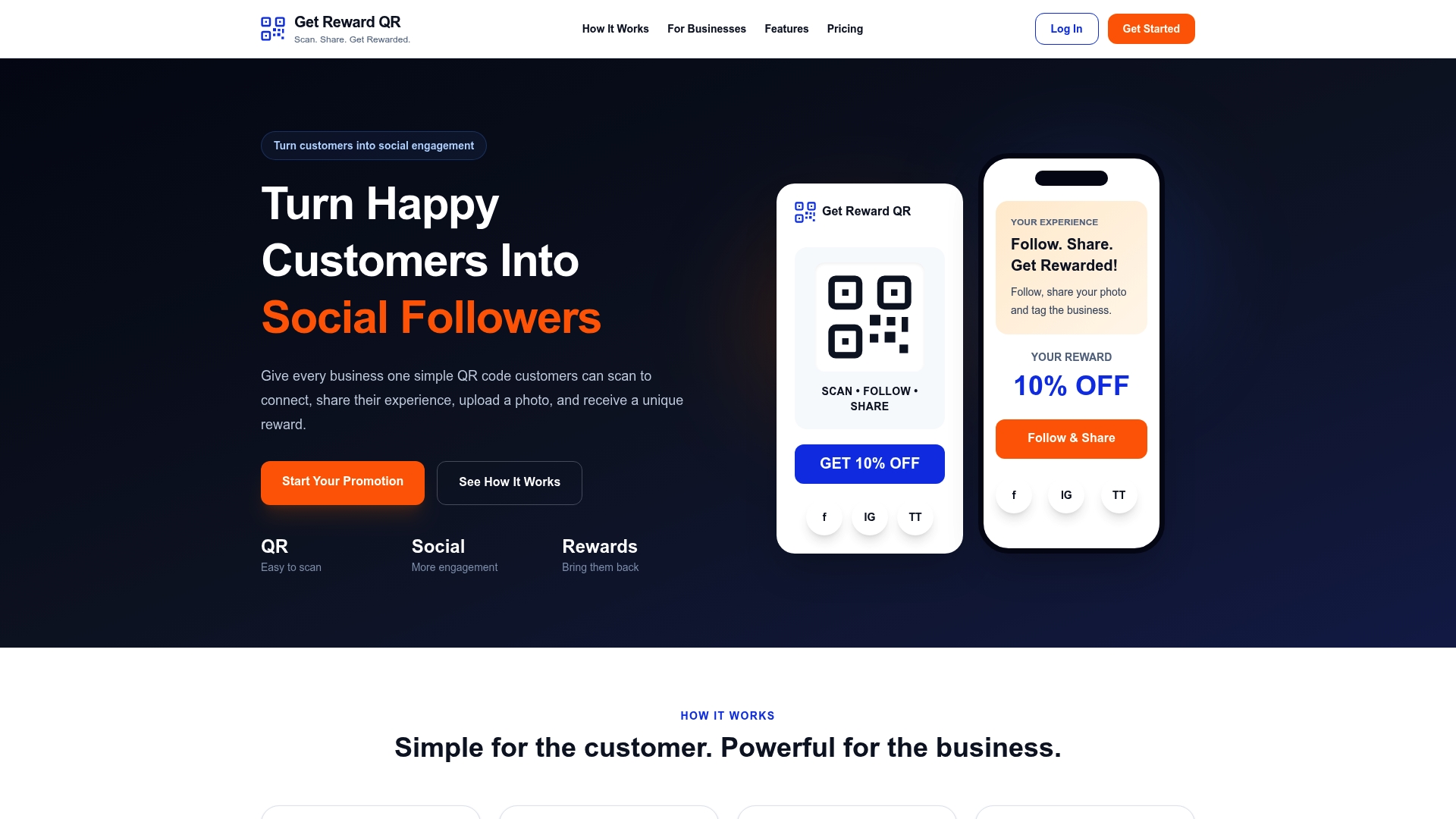
- Single-use coupons generated through QR-based campaigns.
- Staff redemption flows through universal POS mode.
- Campaign analytics to track redemptions and spot unusual patterns early.
If you run a restaurant, gym, salon, or retail shop and want to test these controls on a real campaign, check our pricing for the Monthly plan at $19.99 per month or the Annual plan at $199 per year, and start a short pilot this week.
FAQ
Is there such a thing as coupon fraud?
Yes, coupon fraud is a recognized and well-documented problem that includes counterfeit codes, referral abuse, and automated bulk redemptions. The Coupon Information Center has worked with law enforcement on coupon fraud cases since 1986, and research on referral fraud detection shows it follows measurable, detectable patterns.
Is it worth reporting fraud?
Reporting fraud helps you recover losses faster and contributes to industry-wide data that groups like the Coupon Information Center use to track repeat offenders. Filing a report also creates a paper trail that strengthens any dispute with your payment processor.
How do I prevent gift card fraud?
Gift card fraud shares many of the same defenses as coupon fraud: single-use codes, redemption caps, and monitoring for device and address clustering. Watching for rapid, repeated redemption attempts from the same IP or device fingerprint catches most automated gift card abuse early.
What are some preventive measures to prevent fraud?
The strongest starting measures are single-use coupon codes with short expiry windows, server-side validation at checkout, and staff verification at the point of redemption. Layering in behavioral bot detection and redemption-rate monitoring, as recommended in the 2025 bot threat analysis, closes most of the remaining gaps.
Sources
- No Please, After You: Detecting Fraud in Affiliate
- Affiliate Crookies: Characterizing Affiliate Marketing Abuse
- 2025 E-Commerce Bot Threat Report
- Having Your Cake and Eating It: An Analysis of Concession-Abuse-as-a-Service