Instagram Rewards Campaigns: QR Offers Bring Local Shoppers Back
Instagram Rewards Campaigns: QR Offers Bring Local Shoppers Back

An Instagram rewards campaign uses incentives, such as contests, user-generated content prizes, or QR-triggered coupons, to drive engagement and actions you can measure. The main payoff is conversion: follows, tagged posts, and repeat store visits, not just likes. No-app QR options like Get Reward QR let local businesses run these flows without building an app.
TL;DR:
- Choose one primary goal and up to three KPIs, then assign unique coupon codes, UTM links, or loyalty links before launch to measure conversions.
- A QR pilot can run for 7 to 14 days without an app, but crediting requires linking each handle to a loyalty profile.
- Publish eligibility, winner selection, and exact dates, disclose that Instagram does not administer the promotion, and review entries for bots before awarding prizes.
- Treat platform bonuses as uncertain income; owned loyalty points or QR coupons keep prize rules and payouts under your control, regardless of Instagram changes.
- Track coupon redemptions and UGC submissions alongside reach and follower lift; redemptions show customer action more directly than follower counts alone.
Table of Contents
- Why run a rewards campaign on Instagram
- How to plan an Instagram rewards campaign step by step
- Rules, fair play, and staying inside platform policy
- Promoting and measuring the campaign
- QR-first reward campaigns in practice
- How Instagram’s creator bonus landscape has shifted
- Why owned rewards outlast platform bonuses
- Running your rewards campaign with Get Reward QR
- FAQ
- Sources
Why run a rewards campaign on Instagram
Rewards campaigns work because they trade a small incentive for a visible, shareable action. When a customer tags a friend, posts a photo, or follows an account to unlock a discount, that action shows up in other people’s feeds and extends reach beyond paid spend.
For local businesses, the real value shows up downstream of the post: a follower becomes a repeat customer when the reward ties back to a visit or a purchase. Coupons and loyalty points convert a one-time interaction into a reason to come back.
Creator-facing bonus programs work differently. They pay creators based on platform-defined performance rules that a business cannot control or customize, which makes them less reliable than a business’s own reward mechanics.
Common use cases include:
- Product launches that reward early followers with first access or a discount code.
- Local footfall drives that reward in-store visits with a scan-to-unlock offer.
- UGC galleries built from customer photos submitted in exchange for a reward.
How to plan an Instagram rewards campaign step by step
A rewards campaign works best when you lock the goal before you pick the prize. Here is a planning sequence that keeps the moving pieces manageable.
- Define one primary goal and one to three KPIs, such as follower lift, engagement rate, or coupon redemptions.
- Choose an incentive and entry mechanic that matches that goal: photo tags for UGC, a follow-and-tag combo for reach, or a QR scan for in-store visits.
- Write short, unambiguous rules that state eligibility, how winners are chosen, and the exact start and end dates.
- Set up tracking before launch: unique coupon codes, UTM links, or a loyalty account link, so you can attribute results to the campaign.
- Decide how winners will be selected and how prizes will be delivered, including a time limit for claiming a prize.
- Train staff on redemption so anyone at the counter can validate an entry or scan a coupon without slowing down the line.
Skipping the tracking step is the most common planning mistake. Without a unique code or scan event, you end up guessing whether the campaign actually moved customers rather than just impressions.
Pro Tip: Pick your KPI before you pick your prize. The incentive should be cheap enough to give away often and valuable enough that customers will do the work to earn it.
Rules, fair play, and staying inside platform policy
Clear rules protect both you and your entrants. Post the rules directly on the entry post and link to a fuller version on a landing page so nobody has to guess what qualifies.
A few practices keep a campaign auditable and compliant:
- State plainly that the campaign is not sponsored, endorsed, or administered by Instagram.
- Map each entrant’s Instagram handle to a loyalty record so you can verify who tagged, followed, or commented.
- Document how winners are chosen, whether by random draw or by a judged standard like best photo, and keep a record of that process.
- Watch for prize-hunting accounts and bot comments; a human review step before awarding a prize catches most of this.
Campaigns that skip verification tend to attract entries from accounts that exist only to collect prizes, which dilutes the value of the engagement you’re paying for.
Promoting and measuring the campaign
Promotion works best across formats rather than a single post; for ecommerce brands, strategies like those detailed in the YouTube Ads for Ecommerce guide can also inform successful cross-channel promotion. Combine a feed announcement with Reels and Stories that use a link sticker, add a small paid boost to extend reach past existing followers, and consider cross-promoting with a complementary local business. In-store signage with a QR code captures customers who are standing in front of you but haven’t opened the app.
Measurement should track:
- Impressions and reach to gauge how far the campaign traveled.
- Engagement rate (likes, comments, shares relative to reach) to judge content quality.
- Follower lift during the campaign window.
- UGC submissions and coupon redemptions, the two metrics that tie engagement to revenue.
Trackable redemption events and UGC volume give a clearer read on return than follower counts alone, since a redeemed coupon or a submitted photo is direct evidence the campaign changed behavior.
A simple attribution setup, like “use coupon SUMMER26 for the July giveaway,” makes it easy to count redemptions at the register without extra software.
A workable measurement checklist: set a baseline before launch, run the campaign for a fixed window, collect UGC and tag mentions as they come in, count redemptions at the point of sale, then compare the results against your original KPI.
QR-first reward campaigns in practice
A scan-to-follow, scan-to-share, scan-to-reward flow removes the friction of asking customers to open an app or remember a code. A customer scans a code at the counter, follows or tags the business, and receives a single-use coupon on the spot, all without installing anything. This approach, built into Get Reward QR, reflects how QR-first social rewards are designed to turn a scan into a store visit.
A short pilot keeps the operational risk low:
- Run the flow for 7 to 14 days, matching the QR pilot timeline that lets staff learn the redemption process before a full rollout.
- Train staff to validate a single-use POS coupon at checkout, the same way they’d ring up any discount.
- Build in an initial “link your Instagram account” step, since automated crediting only works once a handle is tied to a loyalty profile.
- Collect UGC submissions during the pilot window and review them before publishing to brand channels.
Pro Tip: Start with a small, time-boxed pilot before committing to a long campaign. A two-week test surfaces abuse patterns and tracking gaps while the stakes are still low.
How Instagram’s creator bonus landscape has shifted
Platform-paid creator bonuses have become less predictable in recent years. Reporting on Meta’s legal and regulatory pressure shows the company adjusting monetization programs amid ongoing antitrust scrutiny, which has coincided with changes to how creator bonus programs are structured and funded.
For creators and businesses alike, this means a bonus program that pays out well one quarter can shrink or disappear the next, because the terms are set entirely by the platform. A business running its own reward mechanic, by contrast, controls the prize, the entry rules, and the payout schedule regardless of what Instagram changes on its end.
This shift is part of why more businesses are building reward flows they own outright, whether through loyalty points, QR-triggered coupons, or direct UGC incentives, rather than depending on a creator fund or bonus structure that can be revised without notice. The practical takeaway is to treat any platform-native bonus as a bonus, not a foundation, and to build your core incentive structure around something you control.

Why owned rewards outlast platform bonuses
Platform bonus programs are built on someone else’s business decisions, and recent changes to Instagram’s creator monetization show how quickly those terms can shift. An owned mechanic, like a loyalty point system or a QR-triggered coupon, keeps the rules in your hands.
My advice to creators and small businesses is the same: treat rewards as a way to build a direct relationship with your audience, not just a short-term engagement spike. Test a small pilot, measure redemptions and repeat visits, and only scale what the data actually supports.
— Arturo
Running your rewards campaign with Get Reward QR
We built Get Reward QR around a simple idea: a customer should be able to scan, follow or tag, and claim a reward without downloading anything. Our platform handles photo uploads, single-use POS coupons, and campaign analytics so you can see what’s working without stitching together separate tools.
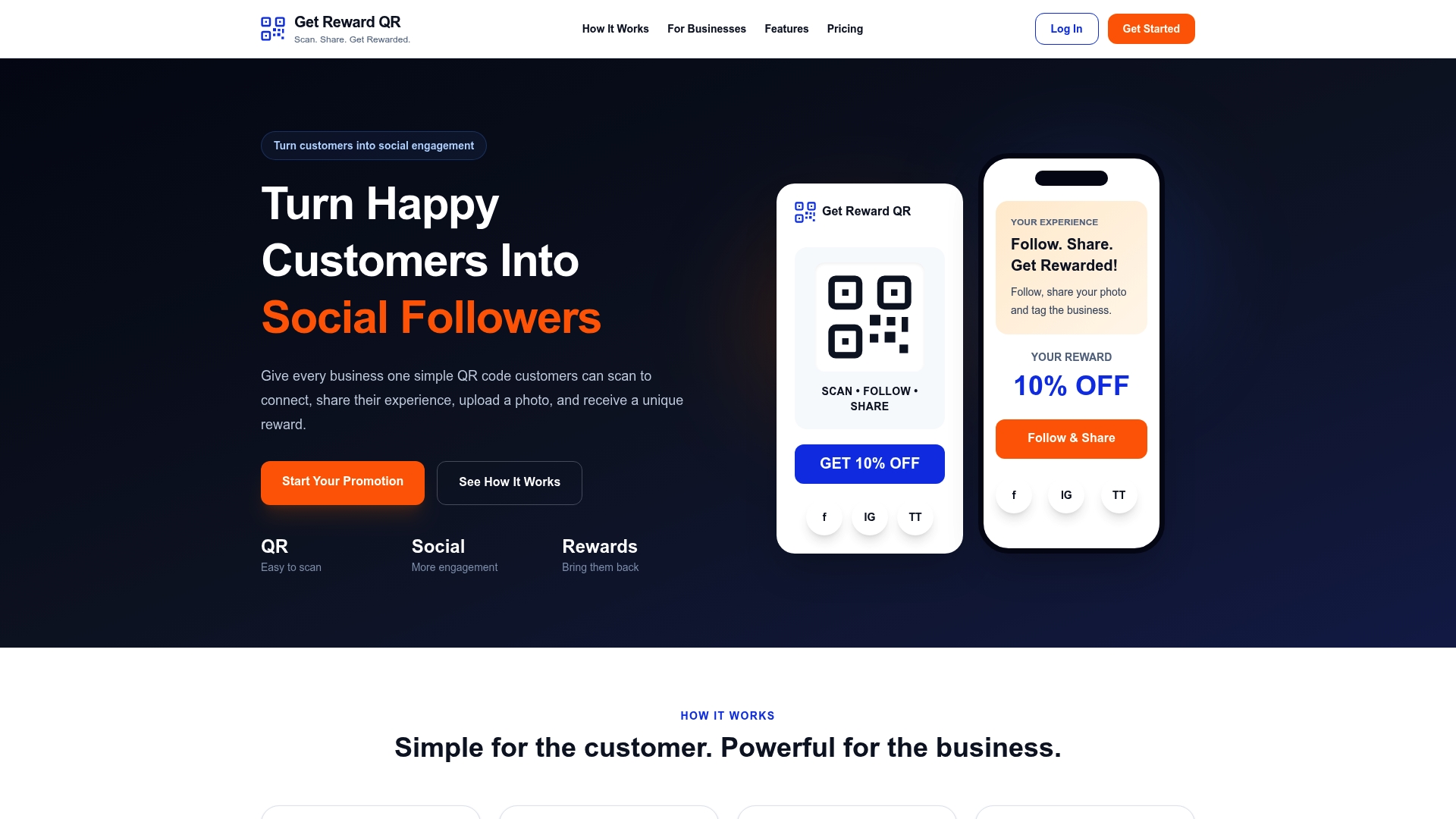
That setup fits the pace of a local business. We support pilots in the 7 to 14 day range, staff can redeem a coupon at checkout the same way they’d ring up any discount, and there’s no app for customers to install or forget about.
- Run a QR-first pilot and see redemptions quickly.
- Train staff quickly on single-use POS coupon scanning.
- Track relevant campaign metrics together in one place.
Our pricing page lists a Monthly plan at $19.99 per month and an Annual plan at $199 per year. Visit our main page to start a pilot campaign.
FAQ
How much do 1,000 Instagram followers cost?
Costs vary widely depending on the method, whether paid ads, influencer partnerships, or giveaway promotion, and no single reliable figure applies across all markets or industries. Rather than chasing a follower count, focus the budget on incentives that drive measurable actions like redemptions or UGC submissions.
What is the 5-3-1 rule on Instagram?
The 5-3-1 rule is a posting framework some marketers use to balance content types: a mix such as five engagement posts, three value or educational posts, and one promotional post within a given posting cycle. Definitions vary across sources, so treat it as a general content-balance guideline rather than a fixed Instagram policy.
Does Instagram have a creator rewards program?
Instagram has offered creator bonus and monetization programs in the past, but reporting shows these programs have been adjusted as Meta faces regulatory and legal pressure. Because terms can change without much notice, creators are often advised to build owned reward mechanics alongside any platform program.
Do Instagram promotions actually work?
Promotions can work well when they’re tied to a clear goal and tracked with unique coupon codes, UTMs, or loyalty links, since that’s what lets you confirm whether engagement turned into visits or redemptions. Promotions that only measure likes or follower counts, without a redemption or conversion check, tend to overstate their actual impact.
How do QR codes fit into an Instagram rewards campaign?
A QR code lets a customer scan, follow or tag a business, and receive a reward on the spot without installing an app, which removes a common point of friction in social rewards. Platforms built around this flow, such as Get Reward QR, pair the scan with single-use POS coupons so staff can redeem rewards at checkout.