Loyalty Across Locations: Pilot With QR, Skip the App
Loyalty Across Locations: Pilot With QR, Skip the App

A multi-location loyalty program is a single rewards system that tracks and rewards customers across every branch, franchise, or storefront a business operates. The approach that works best is a centrally managed program with local execution options: corporate sets the core rules and earns a shared customer view, while individual locations run campaigns that fit their neighborhood. That structure gives you a consistent experience, simpler analytics, and one picture of lifetime value instead of ten disconnected ones.
TL;DR:
- Franchise networks with mismatched registers should test universal POS mode, while operators using one POS brand can pursue direct API integrations.
- Coupons tied to one customer and one redemption prevent screenshot reuse; ask vendors to demonstrate the full process live before signing.
- Require customer activity from in store and QR redemptions to merge into one profile within hours; slower syncing can distort reporting and conceal missed visits.
- Pilot at one or two locations for 60 to 90 days, measuring repeat visits and visits across locations before funding a wider rollout.
- Compare enrolled customer behavior before and after enrollment, not members with nonmembers on one day, because frequent visitors choose to join programs.
Table of Contents
- Why Multi-Location Programs Need Different Design Choices
- Centralized vs. Decentralized Setups: Picking the Right Model
- Must-Have Platform Features for Multi-Location Loyalty
- Branch and Campaign Management Best Practices
- POS, Integrations, and Data Flows: Technical Priorities
- Measuring Success: KPIs and ROI for Multi-Location Programs
- Implementation Roadmap: Pilot, Regional Roll, Full Rollout
- QR-First Rewards: Lower Friction for Multi-Site Teams
- Lessons From Pilots and Rollouts
- How Get Reward QR Fits Into a Multi-Location Rollout
- FAQ
- Sources
Why Multi-Location Programs Need Different Design Choices
A loyalty program built for one storefront breaks down fast once you add a second location, because the technical and operational demands change. Customer identities fragment across sites unless you unify them at the point of signup, and point-of-sale systems rarely match store to store, especially in franchise networks where each operator picked their own hardware over the years.
The upside is real: a shared system lets you capture cross-location visits and build an aggregated view of lifetime value you could never see from siloed registers. A regional coffee chain can finally tell whether a customer who signs up downtown also visits the airport kiosk. A multi-brand operator running three restaurant concepts under one parent company can see whether loyalty members at one brand ever try another.
- Franchise networks often inherit mismatched POS systems, making a unified customer identity hard without a layer that sits above the register.
- Multi-brand operators need loyalty data that rolls up to one corporate view while still respecting each brand’s own identity.
- Without a shared customer record, repeat visits across sites look like separate, first-time visits in your reporting.
Centralized vs. Decentralized Setups: Picking the Right Model
Centralized programs run from one corporate account with identical rules at every location. Decentralized programs let each site or franchisee manage its own rewards, pricing, and campaign calendar. Each model solves a different problem, and the choice usually comes down to a handful of practical factors.
- Scale: a handful of company-owned stores can run centralized with little friction; hundreds of franchisees usually need more local flexibility.
- Franchise agreements: some franchise contracts specify how much marketing control corporate retains, which can force a hybrid structure.
- Currency and language: multi-country operators need localized pricing and translated campaign copy, which decentralized models handle more naturally.
- IT capacity: a lean corporate team may not be able to support dozens of custom local setups, pushing the decision toward centralization.
The hybrid pattern that tends to work best in practice combines a central core of rules (point values, redemption thresholds, brand guidelines) with local campaign templates that managers can adjust within set boundaries. A franchise owner might run a “bring a friend” photo campaign using the approved template, choose their own discount tier, and schedule it around a local event, without touching how points accrue system-wide. This keeps the brand experience consistent while giving local teams enough control to react to their own foot traffic and competition.
Must-Have Platform Features for Multi-Location Loyalty
Not every loyalty platform built for a single shop can scale to ten locations, and the gap usually shows up in five areas.
- Branch and user hierarchy: the platform should let you create a corporate account, add individual locations underneath it, and assign role-based permissions so a store manager can run campaigns without touching system-wide settings.
- Shared wallets and unified profiles: a customer’s points balance and profile need to follow them from one site to another, not reset at each door.
- POS integration and universal redemption: look for universal POS mode or flexible API and plugin options, since franchise networks rarely run identical registers.
- Single-use coupons: generated per customer and redeemed once, this feature closes the most common fraud gap in multi-location rewards, where a screenshot of a discount code gets passed around a group chat.
- Campaign templates and localization: a head office should be able to build a template once and let each branch adapt copy, offers, and timing.
- QR and omnichannel touchpoints: QR codes work at the counter, on receipts, on table tents, and in social posts, giving you one consistent entry point across every channel.
- Per-location and aggregate reporting: you need to see how store 12 performs on its own and how the whole network trends together, in the same dashboard.
Pro Tip: Ask any vendor to show you a single-use coupon getting generated and redeemed in a live demo before you sign, since this is the feature most likely to be oversold.
Shoppers today join more loyalty programs than before, but they reserve genuine loyalty for a shrinking number of brands, and the programs winning that loyalty are moving away from blanket discounts toward frictionless, personalized rewards, according to Retail Dive’s 2026 loyalty trends coverage. A multi-location platform that can personalize offers by branch, rather than blasting the same coupon to every member, is better positioned to hold onto that narrower band of loyal customers.
Branch and Campaign Management Best Practices
Running campaigns across multiple sites without losing brand control takes a few repeatable routines rather than constant oversight.
- Set up a location hierarchy first, with role-based access so regional managers see their cluster and store staff see only their own branch.
- Build two or three template campaigns at the corporate level and let local managers choose, not design, from that set.
- Define exactly what locations can customize: discount percentage within a range, campaign dates, and local imagery, but never point values or redemption rules.
- Write a one-page staff SOP for redemption and customer questions so every location handles a confused customer the same way.
- Audit a sample of local campaigns monthly to catch drift before it becomes a brand consistency problem.
Campaigns built around user-generated content, where a customer posts a photo and tags the business in exchange for a reward, tend to translate well across locations because the mechanic stays identical even as the photo and caption change store to store, as outlined in this approach to QR-first UGC rewards. The redemption step, a single-use coupon a staff member scans or checks off, stays the same no matter which branch runs the campaign.
Pro Tip: Give every location the same three campaign templates to start, then let performance data decide which ones get retired or doubled down on.
POS, Integrations, and Data Flows: Technical Priorities
Technical planning for a multi-location rollout centers on three questions: how you connect to the register, how you reconcile data across online and offline events, and how you stop fraud before it starts.
- POS integration type: universal POS mode (a flow that works regardless of the specific register) tends to be the fastest path for franchise networks with mismatched hardware, while direct API integrations suit operators running a single POS brand company-wide.
- Offline and online reconciliation: a customer who redeems in-store and one who redeems through a QR-linked web flow need their activity merged into one profile within hours, not days, or your reporting will double-count or miss visits entirely.
- Fraud prevention: single-use coupons close the most common loophole, since a code tied to one customer and one redemption event can’t be reused or shared.
- Reporting latency: aim for near-real-time syncing between branch-level redemption and the corporate dashboard, since a 48-hour lag makes it hard to catch a local campaign that’s underperforming before the budget is spent.
A one-week app-free QR pilot is a reasonable way to test these data flows at a small scale before committing to a full integration build.
Measuring Success: KPIs and ROI for Multi-Location Programs
The KPIs that matter for a multi-location program are the ones that reveal whether loyalty is driving behavior, not just tracking it.
- Active members: the share of enrolled customers who engaged in the last 30 or 60 days.
- Repeat visit lift: how visit frequency changes for enrolled customers versus a comparable non-member group.
- Average order value delta: whether loyalty members spend more per visit than non-members.
- Cross-location visits: the percentage of members who visit more than one site, a number that only a unified system can even measure.
Shifting loyalty programs from discount-driven mechanics to personalized, experiential rewards tends to increase program activity and cut down on dormancy, according to Retail Dive. That shift matters most in multi-location programs, where generic blanket discounts rarely account for how different a downtown lunch crowd is from a suburban weekend crowd.
To attribute lift correctly, compare member-level behavior before and after enrollment rather than comparing members to non-members on a single day, since that approach controls for the fact that frequent visitors are more likely to join loyalty programs in the first place. A weekly dashboard view at the location level, paired with a monthly rollup at the regional and corporate level, tends to match how most operators actually make decisions.

Implementation Roadmap: Pilot, Regional Roll, Full Rollout
A phased rollout reduces risk and gives you real numbers before you ask for a company-wide budget.
- Phase 0, define goals and metrics: pick two or three KPIs (repeat visit lift and cross-location visits are a strong starting pair) before building anything.
- Phase 1, pilot: run a focused pilot at one or two locations, check POS and data flows under real conditions, and frame results in terms a finance team will respect, following a structure like this 90-day pilot framework built for CFO-facing ROI questions.
- Phase 2, regional scaling: expand to a cluster of locations, train staff on redemption SOPs, and let local managers tune campaign templates based on what the pilot showed worked.
- Phase 3, full rollout: open the program network-wide, keep a monthly audit cadence, and treat optimization as ongoing rather than a one-time launch event.
QR-First Rewards: Lower Friction for Multi-Site Teams
An app-free, QR-based loyalty flow removes one of the biggest adoption barriers in multi-location rollouts: getting customers to download yet another app. A customer scans a code at the counter, follows a social step or uploads a photo, and receives a single-use coupon a staff member can redeem on the spot, without any app install on either side of the counter.
That structure also lowers the support burden on local teams, since staff only need to learn one redemption gesture, whether that’s a scan or a quick check in a universal POS mode, regardless of which location they work at. For multi-brand operators juggling different concepts under one roof, a single QR mechanic that behaves the same way everywhere cuts training time and reduces the chance a new hire fumbles a redemption during a rush.
- Single-use coupons prevent the shared-screenshot fraud pattern common with generic discount codes.
- A universal POS mode avoids the need to integrate separately with every mismatched register in a franchise network.
- Photo uploads and social tagging give each location a lightweight way to generate local content without a marketing team.
Lessons From Pilots and Rollouts
The operators who get the clearest results run a short pilot first and define success in numbers a finance team cares about: cost per incremental visit, short-term lift in average order value, and the margin on redeemed rewards. The biggest trade-off I see is control versus agility. Corporate wants consistency, local managers want room to react to their own foot traffic, and the hybrid model earns its keep by giving both sides a real answer instead of a compromise nobody likes.
If I were starting from zero, I’d pick two locations with different customer bases, run a 60 to 90 day pilot with one shared template and one locally customized offer, and measure repeat visits before touching a bigger rollout.
— Arturo
How Get Reward QR Fits Into a Multi-Location Rollout
Our platform addresses the need for a loyalty system that works across branches without requiring every location to install and maintain a mobile app. Each location can have QR codes, campaign templates, and a universal POS redemption mode, while keeping the customer’s points and profile unified across sites.
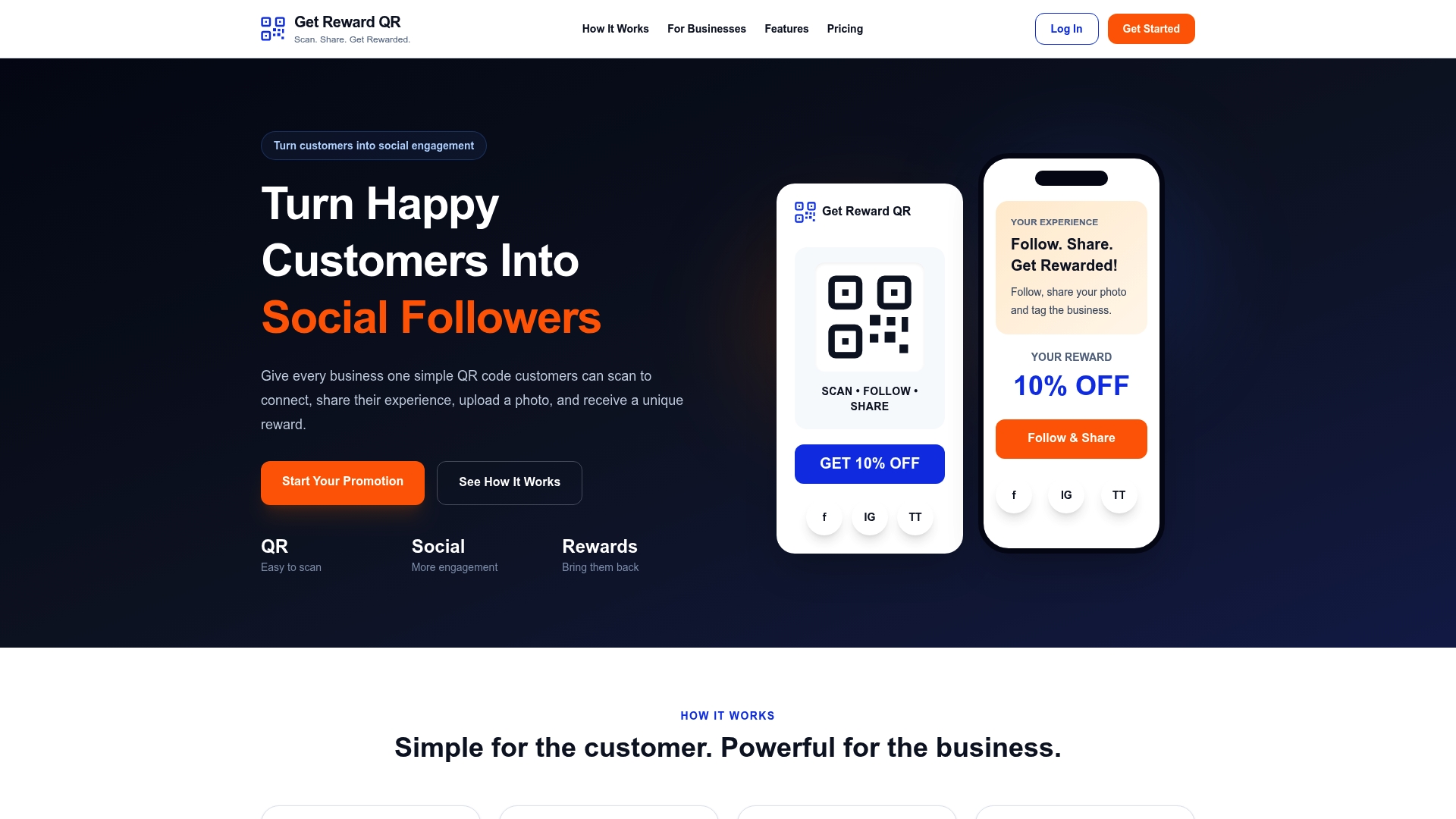
- Branches can run campaigns within corporate guardrails, using a consistent single-use coupon redemption flow at registers.
- Photo uploads, tagging, and social follow steps enable sites to generate local engagement without extensive staff training.
- Our Monthly plan costs about twenty dollars per month, and our Annual plan costs just under two hundred dollars per year, both covering the full QR reward and redemption toolkit.
Start a trial through our product overview to see how a single QR flow handles branch management, redemption, and reporting across your locations.
FAQ
What are the top loyalty programs to learn from?
There’s no single authoritative ranking of top loyalty programs, since lists vary by industry and region. What the strongest programs tend to share is a shift away from blanket discounts toward personalized, frictionless rewards, a pattern Retail Dive’s 2026 coverage ties to higher program activity and lower dormancy.
How much are 10,000 loyalty points worth?
Point values vary enormously by program and are set by each individual business, so there’s no universal dollar figure for a specific number of points. A multi-location operator sets its own redemption rate during setup, and that rate should stay identical across every branch to keep the program fair and easy to explain to staff.
What makes restaurant loyalty software effective for multiple sites?
Effective restaurant loyalty software for multiple sites needs unified customer profiles, POS integration that works across mismatched registers, and single-use coupon redemption to prevent fraud. App-free, QR-based systems lower the friction of getting both customers and staff to adopt the program at every location.
Which qualities define a strong multi-location loyalty program?
A strong multi-location program combines centralized rules with local campaign flexibility, a shared customer wallet across sites, and reporting that shows both per-location and network-wide performance. Programs that personalize rewards rather than relying only on discounts tend to see stronger ongoing engagement, based on broader loyalty trend data.
What should I check before rolling out a loyalty program to all locations?
Before a full rollout, confirm your POS integration handles every register type in use, your data flows reconcile online and offline redemptions quickly, and your location listings are accurate so customers can find the right branch, a step covered in this guide to verifying multiple Google Business Profile locations. Running a small pilot first, with clear KPIs, gives you real numbers before committing budget to every site.