Small Businesses: Launch Birthday Rewards in a Day With No App QR
Small Businesses: Launch Birthday Rewards in a Day With No App QR

Yes, a targeted, time-limited birthday reward delivered by email, text or QR code is one of the simplest, highest-return ways a small business can bring customers back. Loyalty research from MIT Sloan finds the impact depends on design, and Shopify points to collecting birthdays, segmenting customers, and automating delivery. A no-app QR flow like the one we run at Get Reward QR shows how a small operation can set this up without building anything custom.
TL;DR:
- Sending a simple, time-limited birthday reward via email, text, or QR code is highly effective for encouraging repeat visits without complex setup.
- Popular offers include free desserts, discounts, or bonus loyalty points, which can be easily automated and tailored based on customer segments.
- Collect birthdays with clear value exchange methods, limit data access, and ask only for month and day to reduce privacy concerns and increase participation.
- Using multiple delivery channels like email, SMS, and QR codes improves reach and engagement, with automated reminders boosting redemption rates.
- Tracking key metrics such as redemption rate, repeat visits, and cost per redemption helps measure ROI and refine future birthday reward strategies.
Table of Contents
- 1. Top birthday rewards ideas small businesses can copy
- 2. How to collect birthdays and protect customer data
- 3. Personalization and tiering that increase perceived value
- 4. Delivery channels and simple automation flows
- 5. What to measure: KPIs and a simple ROI template
- 6. Industry-specific templates and quick copy
- 7. Client example: QR-based birthday campaigns with Get Reward QR
- Why birthday rewards work better when simple than clever
- Try a no-app birthday rewards setup
- FAQ
- Sources
1. Top birthday rewards ideas small businesses can copy
You do not need a complex points engine to make a birthday reward work. You need an offer that feels generous enough to notice and cheap enough to repeat every year. Here are ideas worth testing, ranked roughly by ease of setup:
- Free dessert or sample: fits cafes and restaurants, costs pennies per redemption, and works on a single visit during the customer’s birthday week.
- Dollar or percent discount: works almost anywhere, typically a modest percentage off, redeemable any time in the birthday month.
- Bonus loyalty points: best for businesses that already run a points system, since it adds value without creating a new process.
- Free shipping: a strong fit for retail and e-commerce, where shipping cost is often the biggest purchase objection.
- Experience upgrade: salons and spas can offer a free add-on service instead of a discount, which protects margin better than cash off.
- Partner offers: pairing with a nearby business (a gym offering a smoothie shop discount) spreads cost and cross-promotes both.
- Choose-your-reward: let the customer pick from two or three options, which increases perceived value at no extra cost.
- Buy-one-get-one: effective for retail and food service when you want to drive a visit, not just give something away.
- Donation match: appeals to mission-driven brands and costs little if capped at a small flat amount per customer.
- Early access: offering first access to a new product or class works well for gyms, boutiques, and seasonal retailers.
A few execution notes apply across the list. Discounts and freebies work best as single-use coupon codes, scannable at checkout, while points should post automatically to avoid manual tracking. Redemption windows matter: a single birthday-day offer drives urgency, while a full-month window reduces staff friction and no-show frustration. For in-store businesses, train staff with one simple rule: check the date, validate the code once, and mark it redeemed so it cannot be reused.
2. How to collect birthdays and protect customer data
Birthdates are personal information, so collect them with a clear reason attached and store them carefully. The best collection points are account signup, checkout, reservation forms, in-store QR signups, and printed receipts with a short link.
- Phrase the ask as a value exchange: “Add your birthday to receive a 10% birthday reward” works better than a bare form field.
- Limit who can access birthdate records, require strong passwords, and use encryption where your platform supports it.
- Set a retention period and delete records you no longer use for active marketing.
- Offer a one-click opt-out and honor it immediately, no follow-up questions required.
Rules on collecting and storing personal data vary by location, so check what applies where you operate before you launch. Being transparent about why you are asking and what you will send protects trust as much as it protects compliance.
Pro Tip: Ask for month and day only, not birth year, unless you have a specific reason to need it. It lowers the privacy stakes and most customers hand it over more willingly.
3. Personalization and tiering that increase perceived value
Personalization does not require a data science team. Starting simple still moves the needle: put the customer’s name in the subject line, reference a product category they have bought before, or segment by how recently they last visited.
Tiered rewards go a step further. Deloitte’s 2024 loyalty research points to tiered segmentation as a way to reinforce value for higher-spending customers while keeping entry-level rewards accessible to everyone.
- Entry tier: a small discount or free add-on for any customer with a birthday on file.
- Mid tier: a bigger discount or free item for customers with a handful of visits or a moderate spend history.
- VIP tier: an experience-based reward, like a free service upgrade or early access, reserved for your top spenders.
Use one-off coupons for entry-level rewards to control cost, and reserve points grants for your mid and VIP tiers where the relationship already justifies a bigger investment.
4. Delivery channels and simple automation flows
Email, text, and QR codes each serve a different purpose, and most small businesses end up using more than one.
- Email costs the least to run and suits businesses with an existing list, though open rates vary widely by industry.
- SMS gets read faster and fits time-sensitive offers, but costs more per message and requires explicit opt-in.
- QR codes work well for in-store businesses because they need no app and tie directly to a point-of-sale redemption.
A reliable trigger sequence sends a reminder seven days before the birthday, the reward itself on the day, and a short follow-up seven days after for anyone who has not redeemed it. A simple flow: email delivers a coupon code, SMS sends a short link with the same code, or a customer scans a QR code in-store and receives a single-use coupon that staff validate at checkout.
Pro Tip: Keep the follow-up reminder low-pressure. “Your birthday reward is still waiting” converts better than anything that sounds like a last chance.
5. What to measure: KPIs and a simple ROI template
Track five numbers: redemption rate, incremental visit rate over 30 and 90 days, average order value uplift on redeemed visits, cost per redemption, and estimated lifetime value uplift among customers who redeem versus those who do not.
- Redemption rate tells you if the offer and timing are working.
- Incremental visits show whether the reward is driving a return trip, not just discounting one that was already coming.
- Cost per redemption keeps the whole program honest against your margin.
Repeat visits carry outsized value. Shopify cites Upside research finding that a significant share of uncommitted customers never return after a first purchase, and one additional monthly visit from that group could substantially lift monthly revenue. If a $5 reward drives even one extra visit worth $25, the math works comfortably in your favor. Test reward size and redemption window in small batches, changing one variable at a time, before rolling a change out to your full list.
6. Industry-specific templates and quick copy
Copy-ready offers save you the trouble of writing from scratch.
- Cafes: “Happy birthday! Enjoy a free pastry with any drink purchase this week.” Pair it with a prompt to add a specialty drink upsell.
- Salons: “It’s your month, enjoy 15% off any service or a free add-on treatment.” Redeemable all month, which spreads bookings out.
- Gyms: “Birthday gift: a free guest pass plus 10% off merchandise this week.” Works well paired with a “bring a friend” prompt.
- Retail: “Happy birthday from us, here’s $10 off any purchase over $50.” A minimum spend protects margin while still feeling generous.
A pattern worth borrowing from public brand examples: offers that combine a small fixed discount with a short redemption window tend to create urgency without feeling stingy.
7. Client example: QR-based birthday campaigns with Get Reward QR
A QR-first flow removes the two biggest friction points in birthday rewards: app downloads and manual code entry. A customer scans a QR code displayed on a table tent, receipt, or window decal, completes an optional social step such as following or tagging the business, and receives a single-use coupon on their phone. Staff validate that coupon once at checkout, and the business sees redemption data in a campaign dashboard.
- No app download means a customer can redeem a reward within seconds of scanning.
- The optional social-sharing step turns a birthday visit into free exposure to that customer’s own network.
- Universal point-of-sale compatibility means staff redeem the same way regardless of what system you already run.
Pro Tip: Place the QR code somewhere a customer naturally pauses, like a table tent or the counter near checkout, rather than burying it in a receipt footer.
Why birthday rewards work better when simple than clever
The conventional advice on birthday rewards tends to overcomplicate things: elaborate point multipliers, multi-step redemption flows, and reward menus that take longer to read than the offer is worth. None of that is what actually drives the repeat visit. What works is a reward a customer can understand in one glance and redeem in one step.

Where most small businesses go wrong is treating the birthday reward as a one-time nice gesture instead of a recurring, measurable part of the loyalty program. The customers who redeem a birthday reward and come back within 90 days are telling you something valuable about where your incremental revenue actually comes from, and that data should shape next year’s offer, not just this year’s goodwill.
If you take one thing from this, prioritize low-friction redemption over reward size. A $5 offer that takes five seconds to redeem will outperform a $15 offer that requires an app, a login, or a printed voucher, every time.
— Arturo
Try a no-app birthday rewards setup
If building a custom app or a heavy loyalty platform feels like overkill for a birthday campaign, a QR-based setup gets you there faster. We built a platform so local restaurants, gyms, salons, and retail shops can launch a branded birthday campaign, issue single-use coupons, and let staff redeem them at checkout, all without asking a single customer to download anything.
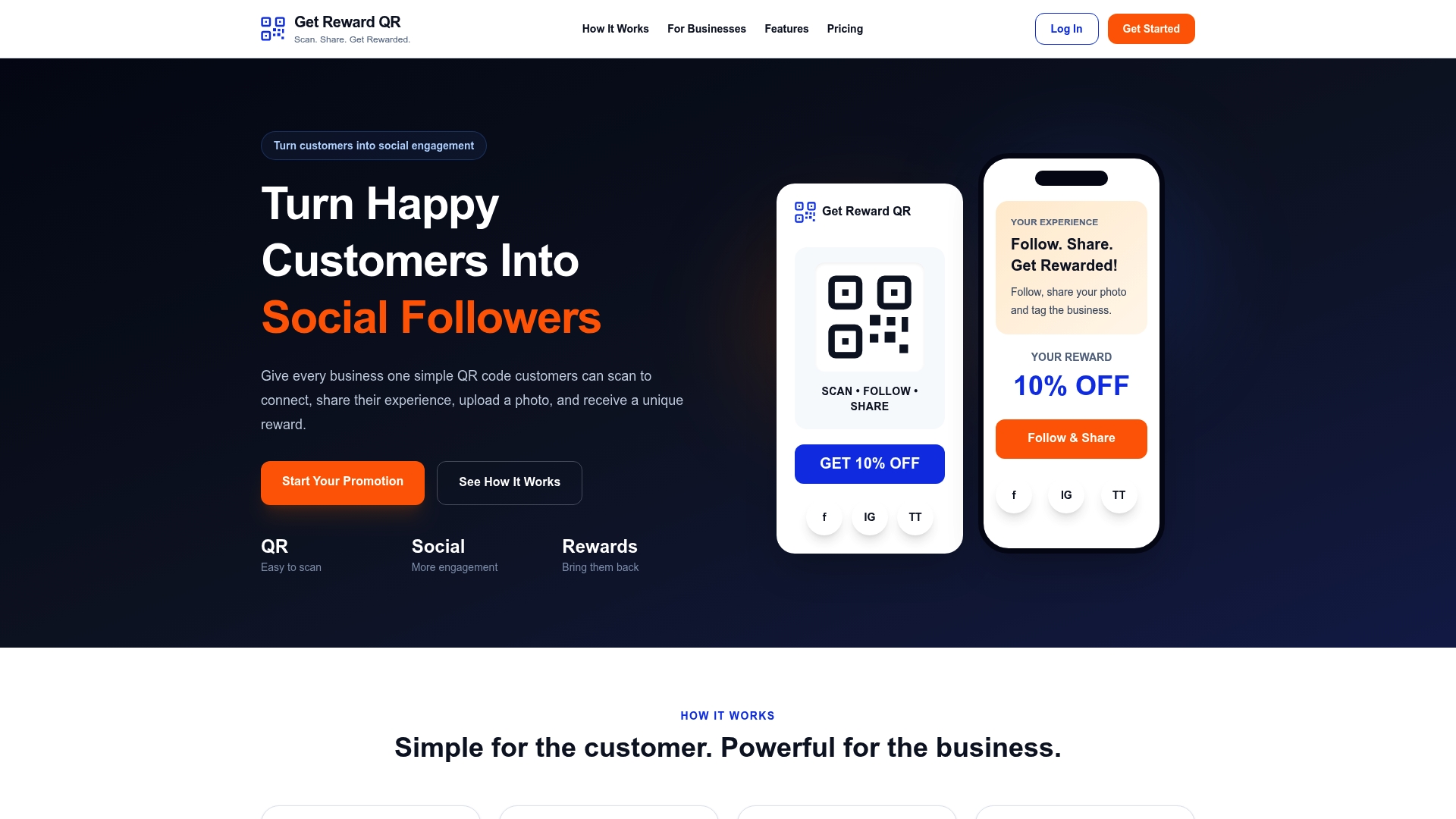
- Campaigns are fully branded and configurable, including the social steps you want tied to each reward.
- Analytics show redemption rates and repeat visits so you can see what is working without extra spreadsheets.
- Plans start at monthly and annual price levels listed on the platform’s pricing page, with a trial available before you commit.
Pairing your campaign with a dedicated social media marketing push can help new followers discover your QR code faster. Visit Get Reward QR to see the platform and start your first birthday campaign.
FAQ
What companies give out free birthday rewards?
Many restaurants, cafes, retailers, and gyms run some form of birthday reward, ranging from a free item to a percentage discount. The exact offer and eligibility rules vary by business, so check the loyalty program or rewards page of any specific company you have in mind.
What can I get for free because it’s my birthday?
The most common free birthday perks are a complimentary food or drink item, a small retail gift, or a free add-on service, depending on where you have signed up for a loyalty or rewards program. Signing up with your birthdate in advance is usually required to receive the offer automatically.
Where gives you free things on your birthday?
Cafes, restaurants, salons, and retail stores commonly offer birthday perks to customers enrolled in their loyalty programs or email lists. The specific businesses and offers change often, so it helps to join a few programs in categories you already shop in.
Which stores give you something free for your birthday?
Retail stores that run loyalty or rewards programs often include a birthday perk as part of membership, typically a discount, bonus points, or a small free item. Checking the terms of a store’s loyalty program before your birthday month ensures you do not miss the signup window.
How do small businesses collect birthday information safely?
Small businesses typically collect birthdates at signup, checkout, or through a simple QR-based form, paired with a clear explanation of the reward customers receive in exchange. Limiting access to that data, setting a retention period, and offering an easy opt-out are standard practices for handling it responsibly.