25 TikTok Challenge Ideas Brands Can Seed With QR Rewards
25 TikTok Challenge Ideas Brands Can Seed With QR Rewards

This page gives you dozens of ready-to-record TikTok challenge ideas plus the one tactic that matters most: pairing your video with an anchor sound or hashtag so people can find and copy it. You will also get a launch checklist, brand UGC tactics, and safety rules. Categories and specific prompts follow below.
TL;DR:
- Challenges that require minimal props, such as reaction duets or quick outfit changes, are easiest for users to replicate and spread widely.
- Using a consistent anchor sound or prompt across all videos is crucial for increasing challenge visibility and encouraging participation.
- Brands can maximize challenge virality by reposting top entries, transforming UGC into ads, and inviting creators who already use and love their products.
- Challenge success depends on low friction, clear instructions, and safety, avoiding risky trends and clearly disclosing paid content.
- In-person businesses can leverage QR codes to prompt user-generated TikTok content that boosts visibility without extra app downloads or complex setups.
Table of Contents
- Types of TikTok challenges you can film today
- How to launch a challenge people actually copy
- How brands turn challenges into UGC campaigns
- 25 challenge prompts ready to film
- Keep it safe and disclose paid content
- When a challenge beats a regular post
- Turn in-person visits into TikTok content
- Sources
- FAQ
Types of TikTok challenges you can film today
Every challenge fits into a category, and picking the right one depends on your skills, your props, and whether you are filming solo or with a group. A TikTok challenge is a repeatable action like a dance, lip-sync, or effect use that people share under a specific hashtag, and the format you choose shapes how easily others can copy it.
- Dance challenges: a short, memorized routine set to a trending sound, best for creators comfortable with choreography and no props.
- Duet and stitch challenges: you react to or extend someone else’s clip, ideal for commentary, comedy, or call-and-response formats.
- POV challenges: you act out a scenario from a specific point of view, low-prop and great for storytelling or humor.
- Transformation challenges: a before-and-after reveal (outfit, makeup, room), which needs a clean cut but no special equipment.
- Hashtag prompt challenges: a text-based prompt like “finish this sentence,” which works for any skill level and needs zero props.
- Prank challenges: a staged surprise or joke on a friend or family member, multi-person and higher production complexity.
- Branded UGC challenges: a business-sponsored prompt tied to a product or service, usually low-prop but requires a tag or hashtag to count.
How to launch a challenge people actually copy
Getting a challenge to spread is less about creativity and more about removing friction. Sprout Social’s guidance on TikTok campaign planning treats a recognizable anchor and a strong hook as the two biggest levers for participation.
- Pick one anchor: a sound, a visual transition, or a repeatable prompt, and stick to it across every model video.
- Write a short, unique hashtag that is still searchable so entries cluster together instead of scattering.
- Hook viewers in the first three seconds with a bold visual or a direct line, since that window decides if someone keeps watching.
- Seed the challenge with a handful of model videos from yourself, friends, or partner creators before asking the public to join.
- Make the format duet or stitch friendly, and put a clear call to action in the caption telling people exactly how to participate.
- Repost and engage with early entries fast, since visible momentum encourages more people to join.
- Track replication rate, engagement rate, and hashtag reach to see if the format is actually catching on.
Pro Tip: Film three or four model videos in slightly different settings so newcomers see the challenge works in more than one context before they try it themselves.
How brands turn challenges into UGC campaigns
Once a challenge is live, brands have several ways to extend its value beyond the original posts. According to TikTok UGC campaign tactics from Shopify, brands repost UGC, stitch it, turn top clips into Spark Ads, invite creators to TikTok Showcase, and repurpose content across other channels and websites.
- Repost and stitch top entries to show real customers using the product, which builds trust faster than a scripted ad.
- Convert standout UGC into Spark Ads so a creator’s organic post gets paid amplification while still looking native.
- Hire creators who already like the brand instead of paying for staged endorsements, since authentic fans produce content that performs better.
- Repurpose winning UGC into website galleries, email, and other paid placements to stretch its value past TikTok.
Brands that spot repeatable patterns in UGC, like an unexpected way customers use a product, can turn that behavior into a new campaign or even a product pivot, according to Shopify’s case examples.
25 challenge prompts ready to film

These are adaptable prompts grouped loosely by effort level. Swap in your own sound or twist the wording, but keep the action simple enough that a stranger could copy it after watching once.
No-prop, solo:
- Finish this sentence: “The moment I knew…” then cut to a punchline.
- Show your face when someone mentions your least favorite chore.
- Recreate your reaction the first time you tried [blank].
- Lip-sync the most dramatic line from a show you are currently watching.
Low-prop, solo:
- A 3-second outfit change synced to a beat drop.
- Rank three items on your desk from best to worst purchase.
- Show your morning routine in five clips or fewer.
- A transformation reveal using a jump cut on the beat.
Duet or stitch friendly:
- React to a stranger’s opinion with your own hot take.
- Continue someone else’s story with your own ending.
- Answer the same question a previous creator answered, but from your angle.
- Duet a tutorial and show your own attempt right after.
Multi-person or prank:
- Swap a household item for a joke version and film the reaction.
- Recreate a sibling or roommate rivalry in under 15 seconds.
- Stage a surprise announcement and capture the real-time reaction.
Brand-friendly, tag-required:
- Show three ways you use a product, tagging the brand in each clip.
- Post a before-and-after using a service, with the brand’s handle in the caption.
- Answer “why I switched to [brand]” in one breath.
- Film your first impression unboxing, tagging the business for a chance to be reposted.
For sound choices, favor whatever is trending in your For You feed that week rather than a song you personally like. For cut timing, land your reveal or punchline on the beat drop, not before or after it. For captions, write the action in plain words (“duet this and finish the story”) so newcomers know exactly what to do.
Keep it safe and disclose paid content
Skip any challenge that involves physical risk, dangerous stunts, or ingesting something unsafe. Those trends get pulled or demonetized and can put participants at real risk. If a post is paid or the creator received a reward for making it, label it clearly with #ad or #sponsored and add on-screen text saying so.
Before you post, run a quick check: is the action safe for a first-time viewer to copy, do you have permission from anyone else in the frame, and does your caption make the prompt obvious without extra explanation?

When a challenge beats a regular post
Choose a challenge when you want low entry friction, high replayability, and content other people will make for you instead of content you make alone. Judge success by replication rate, engagement per view, and follower lift rather than views alone. Brands should tie any challenge to one measurable goal, like tagged posts or coupon redemptions, before launching.
— Arturo
Turn in-person visits into TikTok content
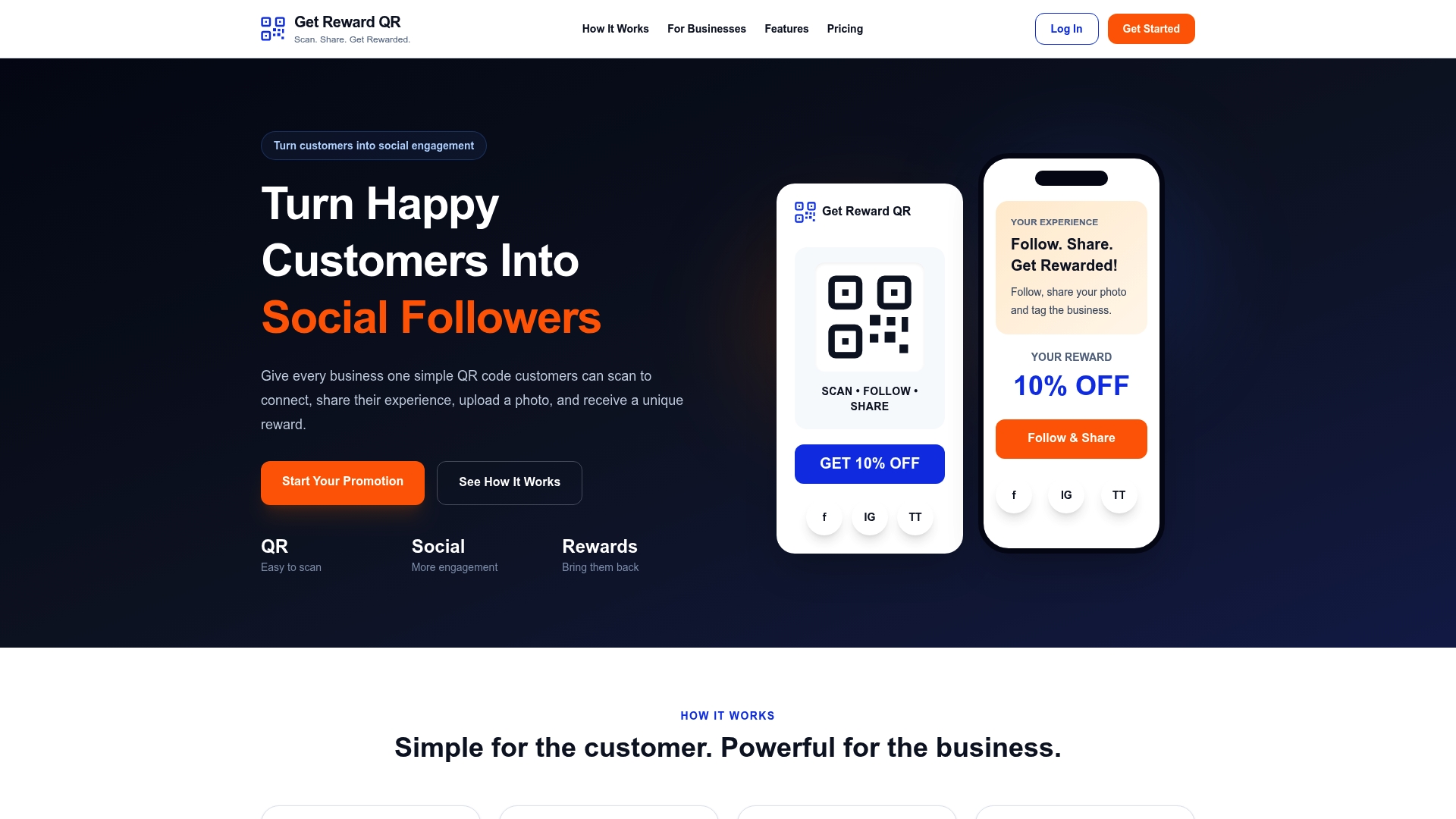
If you run a restaurant, gym, or salon, you do not need a paid campaign to get customers filming for you. A platform lets a customer scan a code at checkout, follow or post on their own social account, upload a photo or tag the business, and get a single-use coupon on the spot, all without downloading an app.
- No app install means customers act while they are still standing at the counter.
- A single QR code at the register or table works as your entire activation point.
- Rewards land immediately, so tagging and posting feel worth the ten seconds it takes.
If you want to see how the setup works for your business, check Get Reward QR’s pricing for the Monthly and Annual plans, or look over the platform overview first. If you are also hiring outside creators to seed a challenge, a marketplace like castcall can help you find and book them.
Sources
FAQ
What are some good challenge video ideas?
Simple, low-prop ideas work best: a synced outfit change, a duet reacting to someone’s opinion, or a “rank these three things” video. Pick a format that a stranger could copy after watching once, since easy replication is what makes a challenge spread.
What are some good challenge ideas?
Dance routines, POV scenarios, and transformation reveals are reliable starting points because they need little to no equipment. A TikTok challenge works best when it is built around one repeatable action tied to a specific hashtag.
What are good TikTok ideas?
Beyond challenges, strong TikTok ideas include duets, stitches, and POV storytelling, all of which lean on formats the platform already makes easy to reproduce. Anchoring any idea to a trending sound or a clear hashtag, as recommended in TikTok campaign guidance, helps new content get discovered.
What are the top TikTok trends right now?
Trends shift quickly and vary by niche, so there is no single fixed list that stays accurate for long. Your best move is checking your own For You feed for recurring sounds and formats, since those reflect what is currently gaining traction in your specific content area.
How do I start a TikTok challenge?
Pick one anchor (a sound, transition, or prompt), write a short and searchable hashtag, and film a few model videos yourself before inviting others to join. Hook viewers in the first three seconds, per Sprout Social’s guidance, and track replication and hashtag reach to see if it is catching on.