Retail Loyalty Ideas: Ready to Copy Rewards in 30–60 Days
Retail Loyalty Ideas: Ready to Copy Rewards in 30–60 Days

Combine an easy-to-earn purchase reward with one non-discount recognition benefit, enroll shoppers at the point of sale, and run a short pilot period before scaling. The 2026 EY Loyalty Market Study finds that programs pairing rewards with access or recognition build stronger emotional connection than discounts alone, and low-friction tools like QR-based sign-up make that combination fast to test.
TL;DR:
- Loyalty programs succeed best when they combine an easy-to-earn purchase reward with a non-discount recognition benefit that fosters emotional connection.
- Launching with one simple earning mechanic and one visible benefit helps clarify the program for customers and staff, reducing confusion and increasing engagement.
- Fast activation, clear communication of points or rewards on receipts or reminders, and simple redemption steps directly influence program success.
- A scan-to-earn QR code system enables small retailers to implement a no-app loyalty mechanic quickly while maintaining tracking and analytics.
- Measuring success based on specific KPIs like visit frequency or basket size and running a short, focused pilot maximizes likelihood of program improvement.
Table of Contents
- 1. Practical Retail Loyalty Ideas You Can Copy This Week
- 2. How to Design and Launch a Loyalty Pilot in 30 to 60 Days
- 3. Keep Loyalty Value Visible and Avoid the Common Traps
- 4. Templates You Can Copy Into a Pilot Brief
- 5. What Backs This Approach
- 6. What Actually Moves the Needle in Retail Loyalty
- 7. How Get Reward QR Fits a No-App Loyalty Rollout
- Sources
- FAQ
1. Practical Retail Loyalty Ideas You Can Copy This Week
Start with mechanics that ask little of the shopper and pay off fast. The ideas below are ordered roughly by how quickly a small or midsize retailer can launch them.
- Simple points with a low first redemption: one point per dollar spent, with 200 points worth $5 off, so a new member sees value within a visit or two.
- Punch-card frequency rewards: buy nine coffees, get the tenth free, a mechanic that suits high-frequency categories like coffee shops and convenience stores.
- Tiered VIP structures: an attainable entry tier based on modest spend, with upper tiers unlocking experiences instead of bigger discounts.
- Paid membership: a flat annual or monthly fee for guaranteed perks, viable when the margin supports predictable member value.
- Behavioral earns: bonus points for signing up, completing a profile, leaving a review, referring a friend, or sharing a post.
- Non-discount recognition: early access to new stock, member-only events, or priority service at checkout.
- Coalition partnerships: cross-promotions with a nearby, non-competing merchant so members earn or redeem across both stores.
A few of these deserve more detail. Tiered programs work best when the first threshold is genuinely close, Shopify’s loyalty guidance notes that premium tiers should require real commitment but reward it with experience, not just a steeper discount. Paid membership fits merchants with recurring, predictable visits (think a gym or a specialty grocer) where the fee covers guaranteed perks like free delivery or priority booking.
For implementation without heavy tech investment, several low-cost options work together:
- A printed or digital QR code at checkout that records to earn instantly.
- A short staff redemption code so employees can apply rewards without a POS overhaul.
- Single-use coupons generated per customer to prevent double redemption.
Pro Tip: Launch with one earn mechanic and one recognition perk. Adding a second reward type before the first one proves itself just adds confusion for staff and customers alike.
2. How to Design and Launch a Loyalty Pilot in 30 to 60 Days
A loyalty program succeeds or fails on the clarity of its first few weeks. Follow this sequence rather than trying to launch every feature at once.
- Define one business objective and its KPI. If the goal is visit frequency, track visits per member. If it is basket size, track average order value uplift.
- Pick a single earn and a visible, fast reward. One point per dollar or one punch per visit, redeemable quickly, beats a complicated multi-tier structure at launch.
- Enable enrollment and first earn at checkout. A QR scan or a phone number lookup lets members see progress immediately, which matters more than any later feature.
- Pilot with a small segment or a cluster of stores. Measure lift against a control group rather than assuming enrollment equals success.
- Iterate on communication cadence. A welcome message, a reminder before points expire, and an occasional surprise double-points day keep the program visible without overwhelming it with noise.
A program-specific KPI matters more than raw sign-up counts. EY’s guidance on measuring loyalty ROI recommends defining success criteria up front and using a counterfactual, a comparison group that did not get the offer, to isolate the incremental sales lift the program actually caused.
3. Keep Loyalty Value Visible and Avoid the Common Traps
Most retail loyalty programs do not fail because the idea is bad. They often fail because members forget the program exists or because the economics quietly erode margin.
- Set a low first-reward threshold so new members redeem within their first one or two visits, not their tenth.
- Show points and available offers on the receipt, through an SMS or push reminder, and on in-store signage.
- Tie rewards to the specific behavior you want and test incrementality rather than assuming every redemption represents new profit.
- Keep earn rules and redemption steps simple: one earn rate, one redemption tap, not a maze of conditions.
- Collect only the customer data you actually need, and be plain about how it will be used.
The privacy point matters more than it looks. A program that asks for a birthday, an address, and a full profile before the first reward will lose signups it never needed to lose.
Pro Tip: If a staff member can’t explain the redemption process in one sentence, the program is too complicated for customers too.
4. Templates You Can Copy Into a Pilot Brief
These short templates map a merchant type to a mechanic, a threshold, and the reason it fits.
- Coffee shop punch card: buy nine, get the tenth free; staff stamps or scans at checkout, no app needed.
- Boutique tiered program: entry tier at a modest spend threshold, VIP tier adds early access to new arrivals and free gift-wrapping.
- Convenience or small grocery points: one point per dollar, with a weekly “double points Tuesday” to drive a slow midweek day.
- Paid membership for recurring merchants: a flat monthly fee covering priority booking or free add-ons, suited to gyms and salons with repeat visit patterns.
- QR low-friction sign-up: customer scans a code to follow a social account and claim an immediate welcome reward, staff redeems a single-use coupon at the register.
5. What Backs This Approach
The recommendations above follow patterns EY’s loyalty research and Shopify’s program catalog both document: early activation, visible progress, and at least one benefit that is not a discount. A scan-based platform can record an earn, guide customers through a social follow or share, and issue a single-use coupon a staff member redeems at checkout, without requiring an app download.
Programs that pair a purchase reward with recognition, access, or feedback build stronger emotional connection than those built on participation alone.
— Arturo
6. What Actually Moves the Needle in Retail Loyalty
Most advice on retail loyalty overweights the reward structure and underweights the first thirty seconds of the customer’s experience. A generous points rate does nothing if the shopper never sees their balance again after enrolling. The bigger lever is visibility: a receipt line, a text reminder, a sign at the register that reminds someone the program exists.
The other overrated idea is complexity disguised as sophistication, five tiers, three earn types, seasonal multipliers. None of that beats a single clear mechanic that a cashier can explain in one breath. Retailers should prioritize a fast first reward and one recognition benefit that has nothing to do with price, then measure whether it actually changed behavior before adding anything else. The instinct to build the full program on day one is almost always the wrong instinct.

7. How Get Reward QR Fits a No-App Loyalty Rollout
For small retailers who want the mechanics above without building an app or a database from scratch, Get Reward QR runs entirely through a scan-to-earn code: customers follow a social step, upload or tag a photo, and receive a single-use coupon a staff member redeems at checkout, with campaign analytics tracking activity behind the scenes.
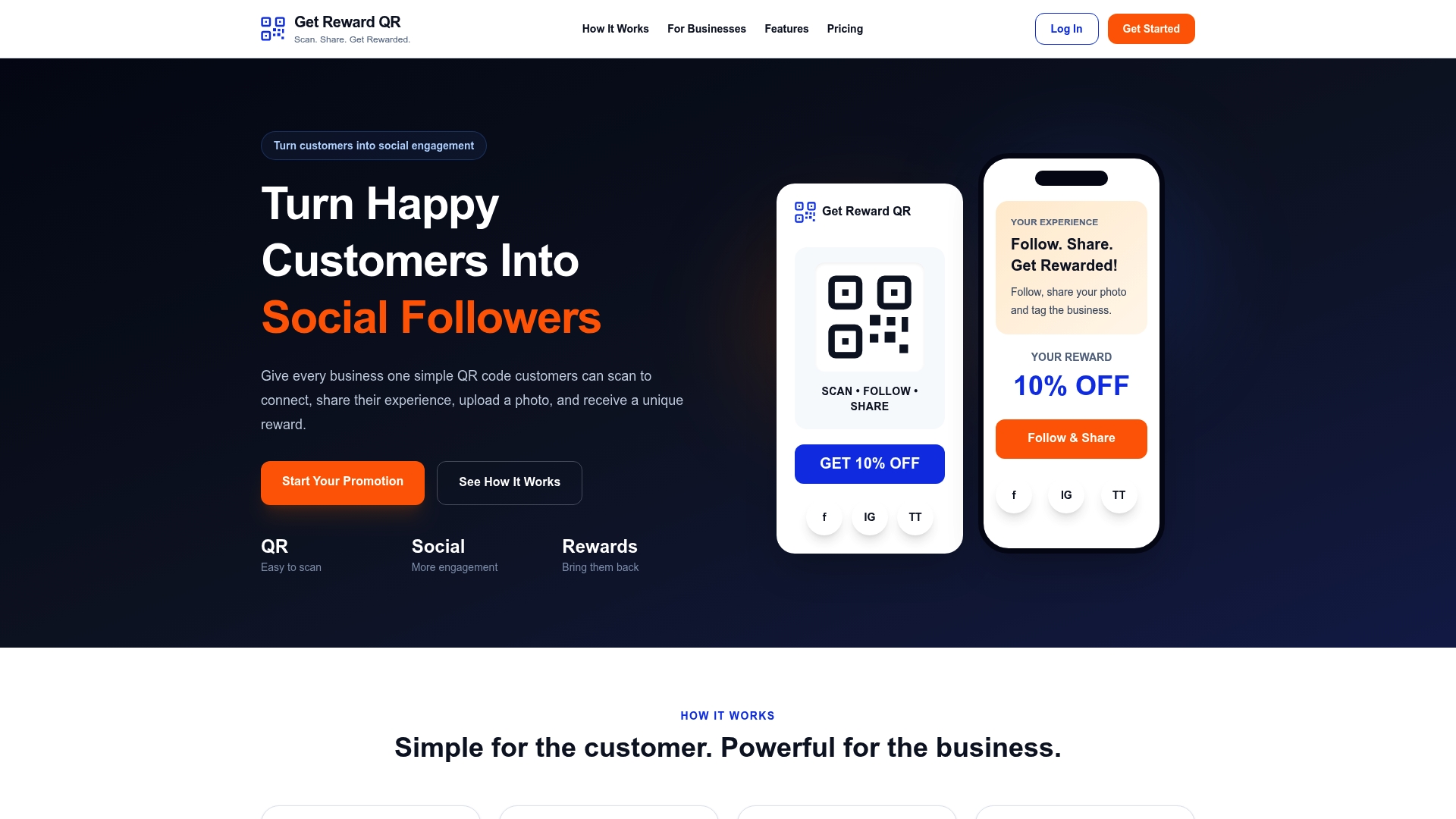
It suits businesses like cafes, salons, gyms, and boutique retail stores where a customer’s phone camera is the only device that needs to work. Compare the Monthly and Annual plans and start a pilot campaign this week.
Sources
- 2026 EY Loyalty Market Study
- Customer Loyalty Program Ideas: Successful Program Examples (2026) - Shopify
FAQ
What are some good examples of loyalty?
Strong examples pair a purchase reward with something that has nothing to do with price, such as early access to new products, a member-only event, or priority service. The 2026 EY Loyalty Market Study points to this combination as the one that builds emotional connection rather than just repeat transactions.
What are the best loyalty programs in retail?
There is no single best structure. The strongest programs match the mechanic to the shopping frequency, punch cards for daily-visit categories like coffee, tiered points for boutique or specialty retail, and paid membership for merchants with predictable recurring visits, as Shopify’s program guidance outlines.
What are the 5 pillars of brand loyalty?
Definitions vary across sources, but a common version includes purchase rewards, recognition or status, access or exclusivity, community or emotional connection, and personalization. The exact framing differs by source, so treat it as a useful checklist rather than a fixed standard.
What are some creative ideas for loyalty cards?
Simple, well-known ideas still work best: a digital punch card that tracks visits automatically, a QR code that records an earn without an app, or a tiered card that unlocks a small perk like free gift-wrapping at the next level. Keep the redemption step to a single action so staff and customers both understand it instantly.