Avoid Legal Risk: 2026 Instagram Giveaway Rules with Caption Template
Avoid Legal Risk: 2026 Instagram Giveaway Rules with Caption Template

Follow Instagram’s required non-affiliation language, publish complete official rules covering eligibility, dates, prize, and winner selection, and link to them from your post. Avoid inaccurate tagging and mandatory Story shares, disclose any material connections under FTC guidance, and check whether local sweepstakes law applies before you launch.
TL;DR:
- Instagram requires clear, official rules with an explicit non-sponsorship statement and careful policing of entry mechanics like tagging and story shares.
- Running a lottery without a purchase option or multiple legal considerations can quickly turn your giveaway into an illegal activity requiring licensing.
- Proper documentation of eligibility, timeline, prize details, and winner notification is essential, along with hosting rules on an easily accessible landing page.
- Verifying winners involves checking entry fulfillment, account authenticity, and avoiding impersonation scams, with timestamped records preferred for dispute resolution.
- Using tools like Getrewardqr can simplify compliance, recordkeeping, and verification, reducing risks of disputes and ensuring transparency.
Table of Contents
- What does Instagram’s promotion guidelines actually require?
- When does a giveaway cross into lottery territory?
- What must your official rules document include?
- Which entry mechanics are safe, and which get you flagged?
- How should you disclose sponsorships and paid partnerships?
- What should your pre-launch checklist and caption look like?
- How do you verify a real winner and avoid giveaway scams?
- Why rules and recordkeeping beat chasing virality
- A simpler way to host entries and rules
- Sources
- FAQ
What does Instagram’s promotion guidelines actually require?
Instagram treats you, not the platform, as the party responsible for a giveaway’s legality and execution. Its Promotion Guidelines require a specific release statement in your official rules: the promotion must be clearly identified as not sponsored, endorsed, administered by, or associated with Instagram in any way. Skip that line and you’re technically out of compliance even if everything else about your giveaway is spotless.
Beyond the release language, Instagram expects organizers to police their own mechanics. A few behaviors reliably trigger account flags or content removal:
- Requiring users to tag people in photos they aren’t actually in, just to inflate reach
- Demanding Story shares as a mandatory (rather than optional) entry step
- Building entry requirements around spam behavior, like tagging unlimited friends with no cap
- Failing to disclose that you, not Instagram, administer the promotion
None of this is optional guidance. It’s the baseline Instagram checks when a giveaway gets reported, and reported giveaways get reviewed fast.
When does a giveaway cross into lottery territory?
Three legal categories matter here, and mixing them up is the single most common compliance mistake organizers make. A sweepstakes picks a winner by chance, no purchase required. A contest picks a winner based on skill, like a caption competition judged on creativity. A lottery combines chance, a prize, and a required purchase, and in most jurisdictions that combination is illegal for private companies to run without a special license.
This is exactly why “no purchase necessary” language shows up in nearly every giveaway you’ve ever entered. If your entry mechanic requires buying something (a menu item, a class pass, a product), you need a free, equally weighted alternate entry method or you’ve likely built an illegal lottery without meaning to.
A few situations should send you looking for legal advice before you post:
- The prize’s approximate retail value climbs into four or five figures
- Entrants can join from multiple states or countries with different sweepstakes laws
- Your business operates in a state that requires registration or bonding above a certain prize threshold
- You’re running the giveaway on behalf of a client or sponsor, which adds a second layer of liability
None of this needs to scare you off running a giveaway. It just means the free-entry option and a quick check of your state’s rules belong on your pre-launch checklist, not as an afterthought.
What must your official rules document include?
Your official rules are the document that settles every dispute, so treat it as the giveaway’s constitution, not a formality. At minimum, cover these items:
- Eligibility — minimum age, residency restrictions, and exclusions (employees, immediate family, past winners), plus a “void where prohibited” clause.
- Timeline — exact start and end dates and times, with the time zone spelled out. “Ends Friday” is not a rule; “Ends Friday, March 13, 2026 at 11:59 PM EST” is.
- Prize description and approximate retail value (ARV) — what they win and what it’s worth, in plain terms.
- How to enter — the exact required steps, plus any optional bonus entries and how duplicate entries are handled.
- Winner selection and notification — method (random draw, judged), how winners are contacted, the claim window, and what happens if a winner doesn’t respond (alternates).
- Prize delivery and tax responsibility — who ships what, and who’s on the hook for reporting a prize’s value if it triggers tax obligations.
- Release and privacy statement — the Instagram non-association language, plus how you’ll handle any personal data collected.
Pro Tip: Host your full rules on a dedicated landing page and link it from your bio, not just in a caption comment. Captions get edited, comments get buried, but a hosted rules page stays put as your record if a winner disputes the outcome months later.
Which entry mechanics are safe, and which get you flagged?
The safest mandatory entries are the ones Instagram can actually verify: follow the account, like the post, leave a comment answering a prompt. Keep the required list short and the wording exact. “Comment your favorite menu item” is verifiable. “Comment as many times as you want” invites spam and looks bad if reported.
Where organizers get into trouble is Story shares and tagging. Story shares should always be a bonus entry, never a requirement, because Stories are often private and there’s no reliable way to confirm someone posted one. The same logic applies to reposting: nice to reward, risky to require.
Tagging has a hard line. Asking someone to tag a friend in the comments is fine. Asking someone to tag themselves into a photo they’re not actually in, purely to game the algorithm, violates Instagram’s own guidance on accurate tagging and can get your post removed.
- Required: follow, like, comment with a specific prompt
- Bonus only: Story share, repost, UGC submission
- Never: self tagging in unrelated photos, unlimited tag spam
A link-in-bio landing page solves the verification problem for all of it, since it gives you a timestamped record of who entered and how, separate from Instagram’s own limited data.
How should you disclose sponsorships and paid partnerships?
If money, free product, or any other material benefit changed hands between you and someone posting about the giveaway, the FTC requires that connection to be disclosed clearly and where nobody can miss it. This applies whether you’re a brand working with an influencer or a creator co-hosting a giveaway with a sponsor.
The FTC’s Endorsement Guides are specific about placement: a disclosure buried behind “more” in a long caption doesn’t count, and neither does a hashtag stack where #ad gets lost among twenty others. For Stories or video, the disclosure often needs to be visual, not just spoken once and forgotten.
- Put the disclosure in the first two lines of the caption, not the end
- Use plain words like “sponsored” or “paid partnership,” not vague terms
- Repeat the disclosure on video and Stories rather than relying on a single caption mention
Pro Tip: When in doubt, disclose twice. A short “Sponsored giveaway with [Brand]” at the top of your caption, plus a visible sticker on any Story version, covers you across formats the FTC actually checks.
What should your pre-launch checklist and caption look like?
Before you schedule anything, run through this sequence:
- Draft and publish your full rules page with every item from the checklist above.
- Decide your winner selection tool and confirm it logs entries with timestamps.
- Pre-select two or three alternate winners in case your first pick doesn’t respond.
- Set your exact start and end time, written with time zone included.
- Confirm who handles shipping and who’s responsible for any prize tax reporting.
- Test your entry verification process on a dummy entry before launch.
A caption template that covers your bases without reading like a legal filing:
- Opening line: “Win a [prize] (ARV $X)! 🎉”
- Numbered steps: “1. Follow @yourbusiness. 2. Like this post. 3. Comment [prompt].”
- Deadline line: “Ends March 20, 2026 at 11:59 PM EST.”
- Legal line: “No purchase necessary. Void where prohibited. Not sponsored by Instagram.”
- Closer: “Full rules: link in bio.”
Your landing page should host the complete rules, capture entrant emails for winner verification, and store a record of exactly what each entrant submitted. That record is what settles arguments later.
How do you verify a real winner and avoid giveaway scams?
Impersonation is the most common giveaway scam: fraudsters clone a business’s account or DM entrants pretending to be the “official winner contact,” then ask for payment or sensitive information to “release” a prize. The FTC’s consumer guidance recommends organizers state plainly, up front, that they will never ask a winner for payment, gift cards, or account credentials.
On your end, verification should take three steps: confirm the winner actually completed every required entry step, check that the account looks authentic (real posting history, real followers), and confirm basic eligibility like age and residency. Notify through your official account only, set a short claim window, and keep alternates ready.
Pro Tip: Landing-page entries and email logs beat screenshots every time a dispute comes up. If two people claim the same win, whoever has a timestamped record wins the argument.

Why rules and recordkeeping beat chasing virality
Giveaways live or die on trust, and trust comes from a rule set nobody can argue with, not from how many entries you get. A hosted rules page and an email-captured entry list turn a one-time promotion into a list you can market to again, long after the prize ships. That’s the real return on doing this properly: less dispute risk today, more owned audience tomorrow.
— Arturo
A simpler way to host entries and rules
Most of the compliance work above (a hosted rules page, a reliable entry record, a way to verify winners without guesswork) is exactly what Getrewardqr was built to remove friction from. Instead of stitching together a landing page, a spreadsheet, and screenshots, A QR flow can capture entries, photo tags, and social steps in one place, with no app download required for entrants.
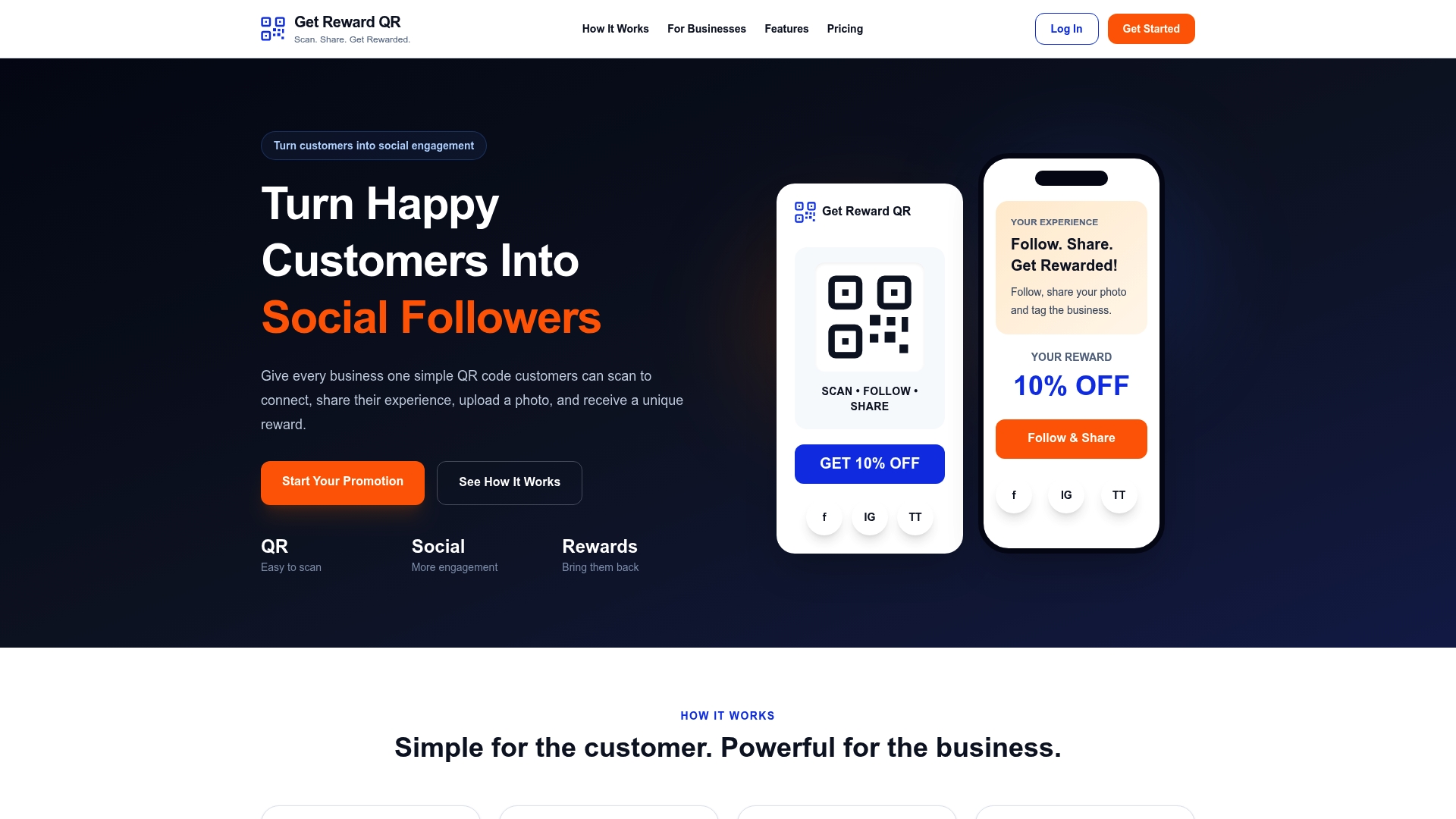
Features can include single-use coupon generation for winners, staff redemption at the register, and campaign analytics to track entries and engagement, addressing common recordkeeping gaps in giveaways. For businesses running a giveaway alongside in-store traffic, a QR-to-landing-page path can be easier to audit than Instagram’s native tools alone.
If you’re planning your next giveaway, check the Getrewardqr platform overview or see plan details starting on the pricing page, where monthly and annual subscriptions are listed.
Sources
- FTC’s Endorsement Guides: What People Are Asking | Federal Trade Commission
- Slow your scroll: how to spot and avoid social media giveaway scams | FTC Consumer Advice
Recheck all three on launch day. Platform and regulatory guidance both get updated without much notice.
FAQ
What is the 5-3-1 rule on Instagram?
The 5-3-1 rule is a content posting rhythm, not a giveaway rule: five pieces of curated content, three original posts, and one video per week. It’s unrelated to Instagram’s promotion or contest requirements, so don’t confuse it with your giveaway compliance checklist.
How do Instagram giveaways actually work?
An organizer posts entry instructions (follow, like, comment, or similar), publishes full official rules covering eligibility and prize details, then selects a winner by random draw or judged criteria after the deadline. The organizer, not Instagram, is responsible for running and administering the entire promotion.
How do Instagram giveaways choose winners?
Most giveaways use either a random draw among everyone who completed the required entry steps, or a judged selection based on creativity or skill for contest-style promotions. Your official rules should state which method you’re using and how ties or non-responsive winners get handled.
Does your Instagram need to be public to win a giveaway?
Not necessarily, but a private account can make winner verification harder since organizers can’t confirm public entry steps like comments or follows. Many organizers require a public account for the entry period specifically to make verification straightforward.
What does Getrewardqr cost for hosting giveaway entries?
Getrewardqr offers a Monthly plan at $19.99 per month and an Annual plan at $199 per year. Both include the QR-based entry and reward tools businesses use to run campaigns without requiring an app download.